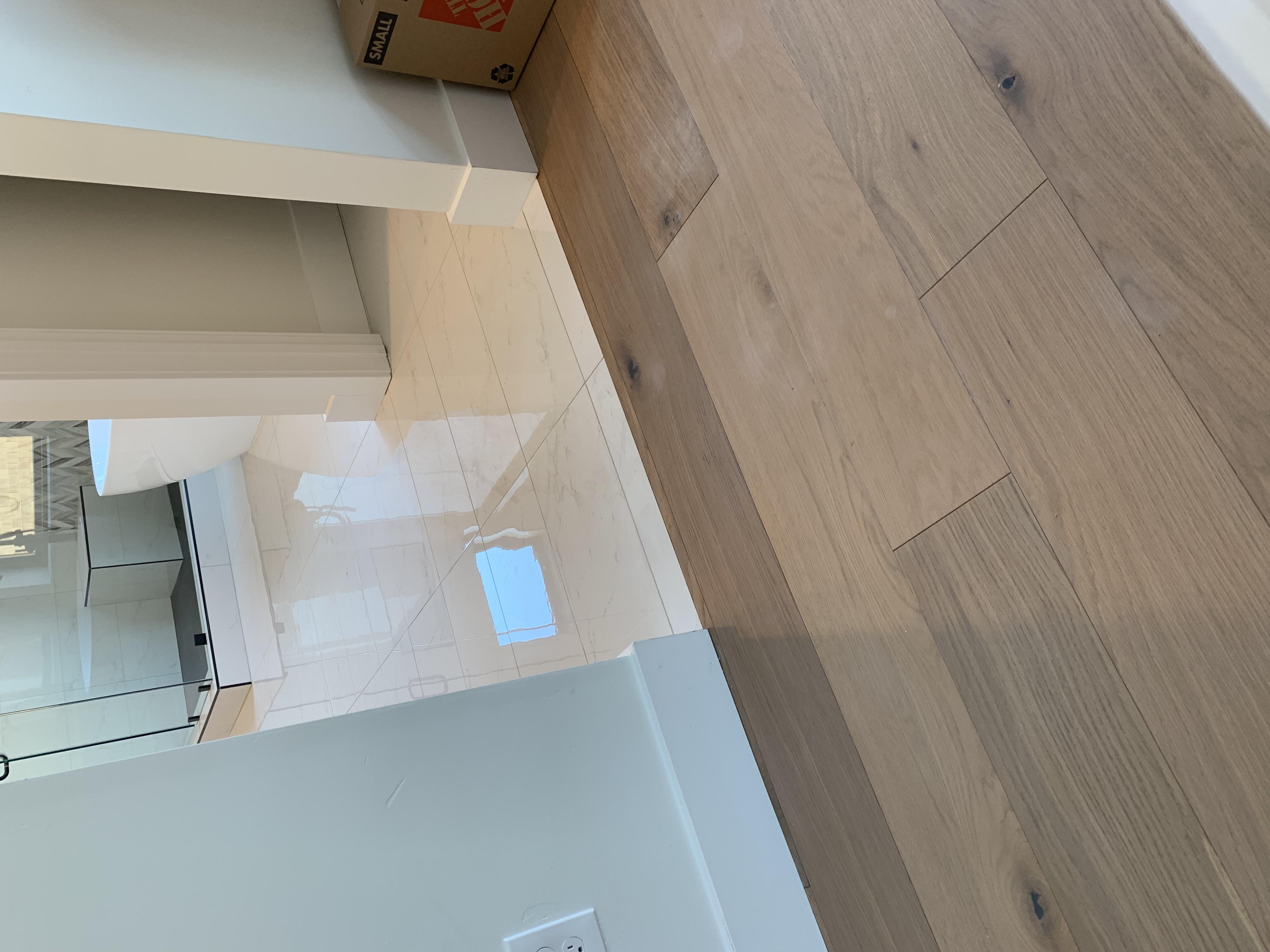
Why do some tile floors crack or break while others last forever?
+
Tile itself is incredibly hard, but it's brittle—it fails when the substrate beneath it moves or flexes. Concrete slabs shift with moisture and temperature. Wood subfloors bounce under foot traffic. Mak Floors eliminates this by installing uncoupling membrane (like Schluter) or cement backer board before setting tile. This decouples the tile from substrate movement and prevents the stress cracks that plague DIY or hastily installed floors. The subfloor preparation is invisible, but it's what determines whether your tile lasts 50 years or 10.
What's the difference between thinset types, and does it really matter which one you use?
+
Yes—it matters more than most homeowners realize. Standard gray thinset works fine on concrete in dry areas, but modified thinset (with latex or acrylic polymers) is required over wood subfloors and backer board because it bonds better and flexes slightly with substrate movement. Epoxy thinset is overkill for residential work but necessary if you're setting tile in a pool. Using the wrong thinset leads to hollow spots, lippage (uneven tiles), and eventual failure. Mak Floors selects the thinset based on your substrate and tile type—not cost or convenience.
Tile installation costs $10–$22 per sq ft, but vinyl is $3–$5. Is it worth the premium?
+
It depends on timeline and usage. A 200 sq ft kitchen in vinyl costs $600–$1,000 installed but will need replacement in 10–15 years. The same kitchen in tile costs $2,000–$4,400 but will still be in service in 40 years. Over a 50-year home ownership, tile amortizes to less than $50 per year. More important: tile holds up to wet feet, dropped pots, and furniture legs without damage. Vinyl scratches and stains permanently. If you're in your forever home or flipping for resale, tile returns its cost; if you move every 5 years, vinyl might win on cash flow alone.
How often does grout need to be sealed, and what happens if you skip it?
+
Unsealed grout is porous and absorbs water, spills, and bacteria like a sponge. In kitchens and bathrooms, this leads to dark staining, mold, and slow degradation of the grout joint itself. Sealing grout (silicone or penetrating sealer) is cheap insurance—$0.50–$1.50 per sq ft—and should be done 72 hours after installation, then resealed every 2–3 years depending on traffic and wet exposure. Mak Floors uses stain-resistant epoxy or urethane grout where possible, which reduces but doesn't eliminate the need for sealing. Skip sealing and you'll spend years fighting stains instead of enjoying your floor.
Does tile work well in Roseville homes, or is it better suited to warmer climates?
+
Tile thrives in Northern California's climate. Sacramento summers are hot enough that tile stays cool underfoot (a genuine comfort benefit), and winter moisture from rain and humidity is exactly what sealed tile and grout handle best. Tile is ideal if you're installing radiant in-floor heat, which is increasingly popular in our region's newer builds and renovations. The only real consideration is freeze-thaw cycles in unheated garages or outdoor patios—but Placer and Sacramento counties rarely freeze hard enough to damage properly sealed tile. If you're doing a bathroom or kitchen remodel in a Roseville home built before 1980, tile almost certainly wasn't there originally; it's a major upgrade that modern homes and buyers expect.