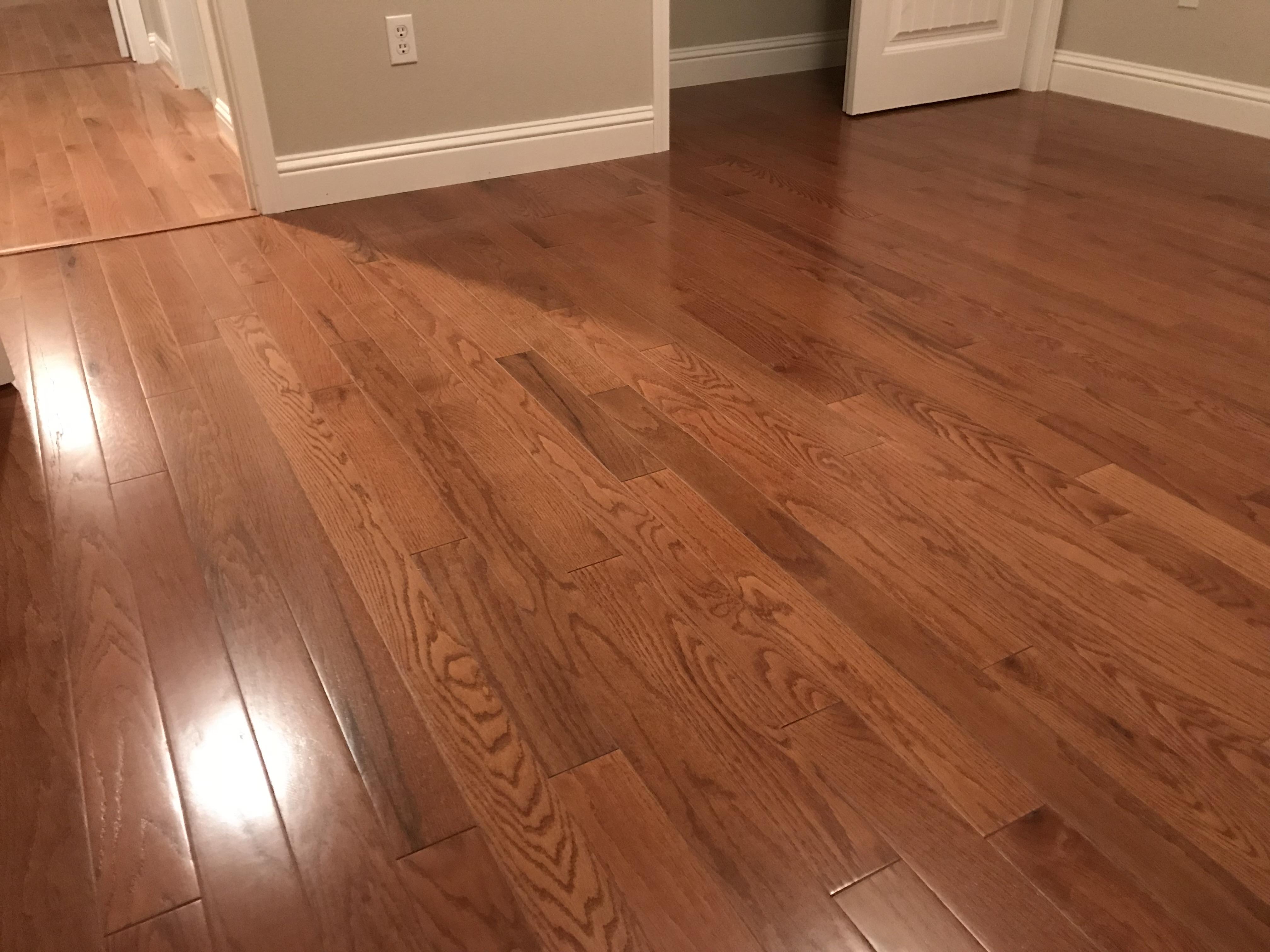
Why does white oak resist those pink undertones that red oak develops?
+
White oak and red oak are different species with distinct cellular structures. Red oak's wide, open grain naturally contains tannins that read as warm pink or orange when finished, especially under natural light. White oak's tighter grain and different wood chemistry produce a cooler, more neutral base color that accepts gray, whitewashed, and light natural stains without those warm undertones bleeding through. This is a permanent material characteristic—not something stain can fix after the fact. If you're designing around a modern or farmhouse aesthetic with cool-toned furnishings, white oak won't fight your palette the way red oak will.
How long does white oak need to acclimate before installation, and why does it matter?
+
White oak must acclimate to your home's humidity and temperature for 7–14 days before installation. Because white oak is denser and more dimensionally stable than red oak, it moves less overall, but improper acclimation can still cause cupping, crowning, or gaps to develop after install. Sacramento's dry summers and mild winters create real seasonal swings; Mak Floors conditions the material onsite to match your home's actual moisture levels before we lay a single plank. This step is non-negotiable for a lifetime warranty installation—it's why we monitor acclimation rather than rushing the job.
Is white oak worth the premium over red oak or engineered hardwood?
+
White oak costs 15–40% more than red oak per square foot, but you're paying for material that's 20% harder, won't shift color over time, and gives you 50–100+ years of wear life instead of 25–40. If you're planning to live in your home for 10+ years or want a floor that stays beautiful under modern lighting and stain choices, the math favors white oak. Engineered hardwood is cheaper upfront but comes with a thin veneer layer—once it wears through high-traffic areas, you can't refinish it. White oak can be sanded and refinished multiple times across its lifetime, making it a true long-term investment.
How do I care for white oak to keep it looking clean without damaging the finish?
+
White oak's density makes it forgiving with everyday use, but the finish—not the wood—is what protects it. Vacuum or dry-sweep weekly to avoid grit scratching the surface, wipe spills immediately with a barely damp cloth, and use white oak-specific floor cleaner every 2–3 months. Avoid standing water, steam mops, and acidic cleaners like vinegar, which etch the topcoat and can expose the wood to moisture. If you choose a matte or satin finish (popular with contemporary white oak), light surface scratches fade into the grain pattern and are nearly invisible—high-gloss finishes show every footprint and dust particle, so most modern installations go matte.
Does white oak work well in Sacramento-area homes, and what finishes look best here?
+
White oak thrives in Sacramento's climate—the region's low humidity and intense summer sun actually favor a denser, more stable hardwood like white oak over softer species that expand and contract more dramatically. It's perfect for contemporary homes and farmhouse designs that dominate the newer developments in Placer and Sacramento counties. Natural, whitewashed, and cool-gray stains are most popular with white oak installations we complete here; these finishes complement the region's modern and transitional aesthetics without looking trendy or dated. If your home has high ceilings, large windows, or lots of natural light, white oak's clean grain and neutral tone won't create visual clutter—it reads as calm and grounded rather than busy like red oak can.