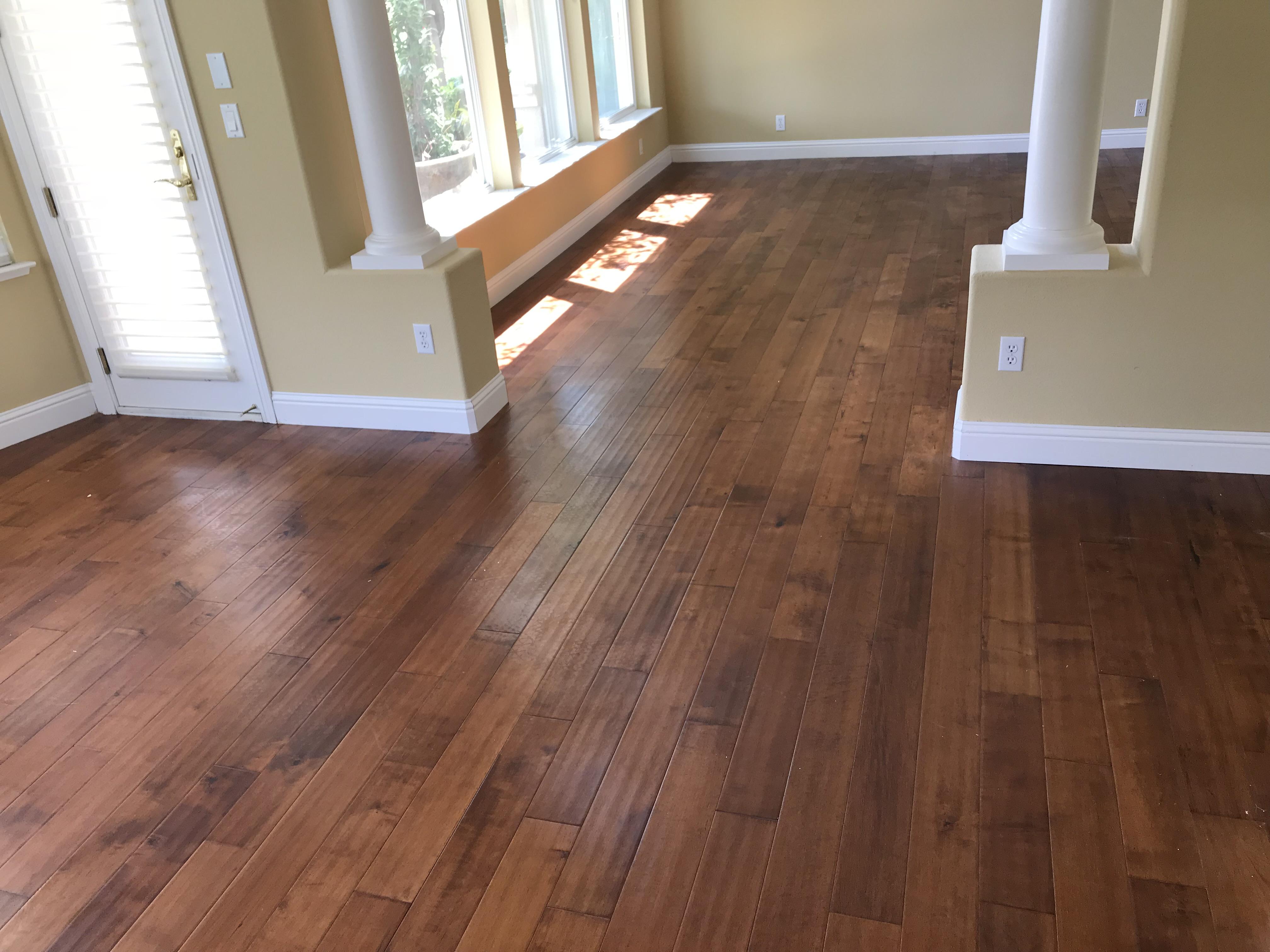
Why do wide plank boards cup or gap more than narrow strip?
+
Wider boards have more surface area exposed to seasonal humidity swings, so they absorb and release moisture across a larger footprint—this causes more noticeable cupping (edges higher than center) or gapping (seams opening) if the subfloor isn't perfectly flat or if the board wasn't acclimated properly. A narrow strip can hide minor subfloor waves; a 7-inch plank broadcasts them. We combat this by laser-checking subfloor flatness before we start and letting boards acclimate to your home's actual humidity level for a week before installation, so the wood isn't shocked by a sudden environment change.
What subfloor preparation is non-negotiable for wide plank installation?
+
Your subfloor must be flat to within 1/8" over a 10-foot span—that's the industry baseline for wide plank. If you have concrete below, it must be sealed, dry (calcium chloride test under 3 lbs/1000 sq ft), and preferably with a moisture barrier and underlayment. Joist spacing and bounce matter too: we verify structural integrity before we lay a single board. Mak Floors uses a moisture meter on every job and won't proceed if conditions aren't right, because cutting corners on prep means callbacks in 18 months.
Is wide plank more expensive than narrow strip, and is it worth it?
+
Wide plank typically costs $11–$20 per square foot installed (compared to $8–$15 for narrow strip), so you're paying maybe $1,000–$2,000 more for a 1,000 sq ft room. The return is visual: fewer seams = cleaner, more open aesthetic that actually makes rooms feel 10–15% larger and reads as higher-end without premium wood species pricing. If you're in a modern or farmhouse home with open floor plans, that difference is worth every dollar; if you have a compartmentalized layout, narrow strip does the job fine.
How long will wide plank last, and what maintenance does it need?
+
Wide plank hardwood lasts 50+ years or more with normal care—our lifetime installation warranty backs every nail and adhesive point. Maintenance is simple: vacuum weekly, wipe spills immediately (don't let liquid sit), and recoat the finish every 3–5 years depending on foot traffic. Avoid excessive moisture (no steam cleaners), use felt pads under furniture, and keep humidity between 30–50% year-round. Sacramento's dry summers and mild winters are actually ideal for hardwood, so you won't fight the climate the way folks in humid regions do.
Does wide plank make sense for a typical Roseville or Sacramento home?
+
Absolutely—especially if you have a newer open-concept layout, vaulted ceilings, or farmhouse/modern aesthetics. Older homes with small compartmented rooms often look better with narrow strip because it respects the original spatial logic. Sacramento's building boom favors open great rooms, and that's where wide plank shines. Our local hardwood species—oak, hickory, walnut—all come in wide plank widths and handle our climate well, plus they complement the contemporary and transitional styles we see across Placer and Sacramento counties.